
· by Sonny Miller
Selling an Inherited Coin Collection in California: A Step-by-Step Guide
Inherited a coin collection and not sure what to do? A practical guide to valuation, your options, and the mistakes to avoid — from a Southern California coin buyer.
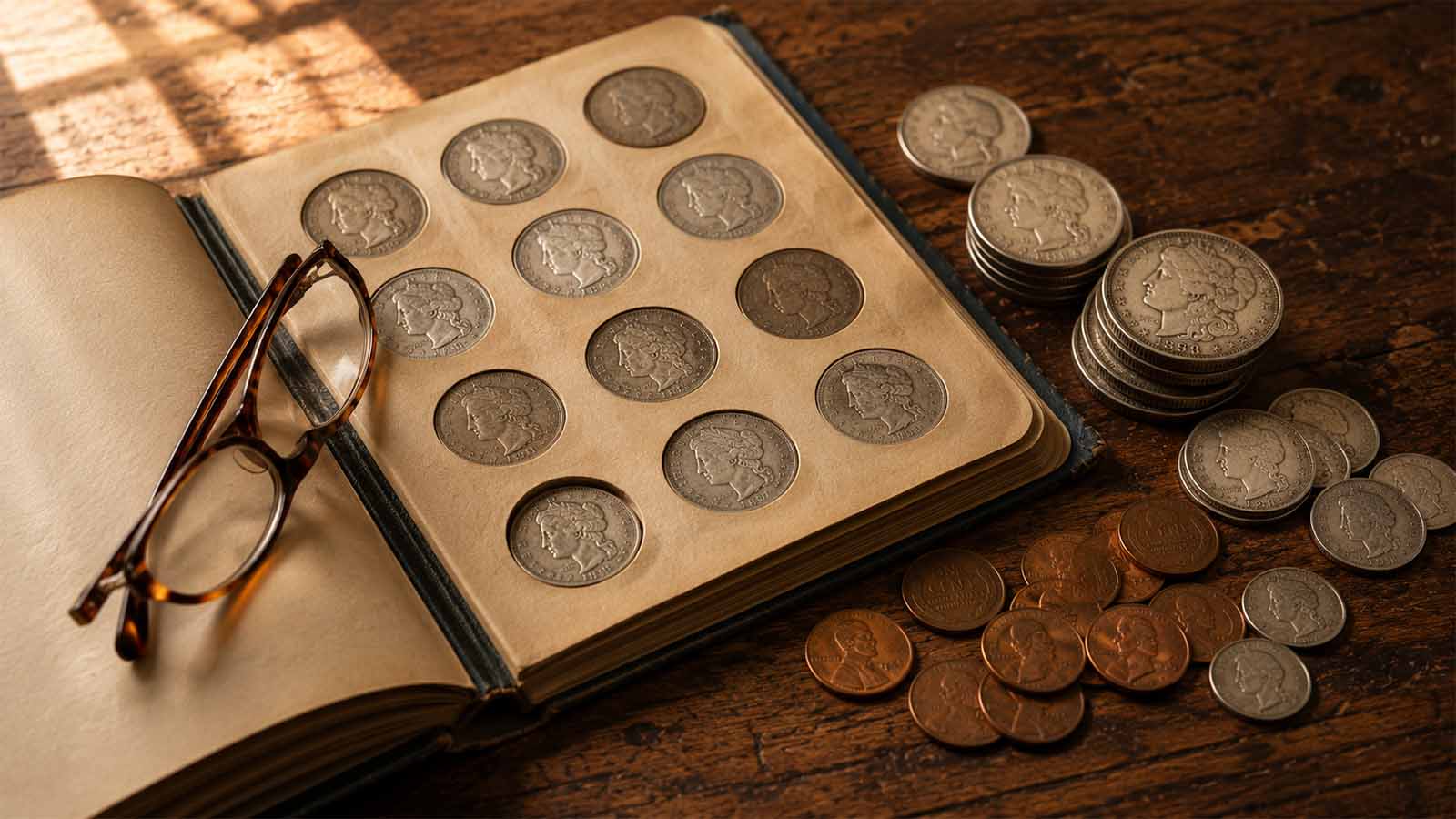
Hey, Sonny here. A lot of people who call us aren’t collectors at all. They’re someone who just lost a parent, an uncle, a grandfather — and now they’re standing in a quiet house looking at a box of coins they don’t know what to do with.
If that’s you, first: I’m sorry. Take your time. There’s no rush on any of this, and anyone who tells you otherwise doesn’t have your interests in mind.
Here’s what to actually do, in the order to do it.
Step 1: Don’t touch anything yet
I mean it. Before you sort, organize, clean, or “research” — do nothing. The single biggest cause of lost value in inherited collections is well-meaning family members who tidy them up before getting them looked at.
Don’t:
- Wash, polish, or wipe down any coins
- Take coins out of their original holders, flips, or albums
- Sort by what “looks valuable” vs what looks plain
- Throw away the old papers, envelopes, or receipts in the box — those can have important provenance info
If the coins are loose in a jar, that’s fine — leave them in the jar. If they’re in a binder, leave them in the binder. Whatever state they’re in is the state a buyer needs to see them in.
Step 2: Find out what you actually have (before deciding what to do with it)
You don’t need to know coin values yourself. You need someone who does to take a look. There’s a temptation to spend a weekend Googling individual coins on eBay, but it won’t get you anywhere useful — eBay prices are all over the map, and you won’t be able to grade condition from a photo on your phone.
What you want is a free valuation from someone who actually buys coins. Not an online estimate, not a value guide, not a probate appraiser (who’s a generalist). A real numismatist who handles coins for a living.
This is also where you find out whether the collection is worth $500 or $50,000 — and that single piece of information changes every decision you make next.
Step 3: Understand your options
Once you know what you have, you’ve got a few real paths:
Sell to a dealer or buyer. Fastest, simplest, no fees. You get cash, the coins are gone, done. The trade-off is the offer reflects what a buyer can resell for at a profit, so it won’t be the absolute highest possible number — but it’s a real number, today, in your hand.
Auction house. Can get top dollar for genuinely rare coins, but you’ll pay seller’s fees (often 10-20%), wait weeks or months for the sale, and there’s no guarantee of the final price. Only worth it for collections with serious key dates or high-grade rarities.
Consignment. A dealer sells the coins for you and takes a cut. Slower, less certain, and you don’t get paid until the coins sell.
Hold them. Totally valid. If the coins have sentimental value and you don’t need the money, there’s no rule that says you have to sell. Just store them properly — out of humidity, not in PVC plastic flips, ideally in archival holders.
For most inherited collections, especially mid-size ones in the few-thousand-to-low-five-figures range, selling to a reputable buyer is the cleanest move. Auction makes sense for the rare exceptional collection.
Step 4: California estate / probate notes
A few things to know if the collection is part of a formal estate:
- If it’s going through probate, the executor needs an appraisal for the estate inventory. A buyer’s offer isn’t the same as a formal appraisal — they’re different documents for different purposes.
- For estates under California’s small-estate threshold ($184,500 as of recent law), probate may not be required at all, which simplifies things.
- Heirs typically get a “stepped-up basis” on inherited assets — meaning capital gains tax is based on the value at the date of death, not the original purchase price. For coins held a long time, this matters.
- This is general information, not legal or tax advice. For anything formal, talk to an estate attorney or CPA.
If you need both a written appraisal and a buyer, say so up front. Some buyers can do both; some can’t.
Step 5: Make the call
When you’re ready — and only when you’re ready — get a valuation. If you call us, here’s what happens:
We come to you. We sit at your kitchen table, go through the collection carefully, walk you through what’s there, and tell you what we’d pay. If you want to sell, we pay you on the spot. If you want to think about it, take a week, get a second opinion, or hold onto everything — that’s fine too. No pressure, no obligation, no follow-up calls.
That’s the whole point of doing it this way. You’re on your turf, dealing with this on your timeline, with the coins right in front of you.
📞 (714) 987-1931 — call or text whenever you’re ready. We cover all of Orange County, LA, Riverside, San Bernardino, and San Diego counties.
Take care of yourself first. The coins can wait.
— Sonny